Thursday, May 10, 2012

Horrible Harry

Series Title: Horrible Harry
Author: Suzy Kline
Book Series

     I read many books from the Horrible Harry series throughout this semester.  The series is about a young boy named Harry and his second and third grade years in school.  The stories are told from the point of view of his best friend, Doug.  These are easy reads for beginning chapter book readers.  Each book is a compilation of silly stories about Harry, Doug, their teacher Mrs. Mackle, and all their friends.  Some of the books I read include: Horrible Harry in Room 2B, Horrible Harry and the Ant Invasion, Horrible Harry's Secret, Horrible Harry and the Christmas Surprise, Horrible Harry and the Kickball Wedding, Horrible Harry and the Dungeon, and Horrible Harry and the Purple People.  However, Suzy Kline has written over thirty books in this series.  I tried my best to read the books in order of publication from the selection I had, but I would not say it is necessary.  I would describe these books as a comedy television show that you can turn on no matter what episode it is and know what's going on.  Of course some little things build on each other, for example, in the Secret book you first learn about Harry's big crush on a girl in the class named Song Lee.  Then later in the Christmas Surprise Harry gets Song Lee a Christmas present, and in Kickball Wedding, Harry and Song Lee get married on the kickball field at recess.  I would have to say Kickball Wedding was my favorite out of the few that I was able to read.  I liked the incorporation of Song Lee's Korean culture as the whole group of friends prepared for the spectacular wedding between Henry and Song Lee.  All to have them both run off to play kickball instead of staying with the rest of the children for the marriage arranged by the big tree.
     Though I do not think these are incredibly great books for children, providing little substance other than practice for reading, there are some elements that I did appreciate.  I think, especially for early readers, that these stories would be of great interest to students because they can relate to the everyday problems these students face in school.  Most if not all children can identify with the science projects, classroom pets, substitute teachers, bullies, recess drama, and friendship.  Another part I found interesting and positive about the stories is that in some ways they are open to more real life circumstances that kids really go through.  Sidney, (Harry's rival), goes through a tough time when his mom gets remarried to a new boyfriend.  Song Lee, brings the culture of her Korean family into holidays, and Ida confronts her unique heritage of Asian, African, and Indian.  These more cultural aspects along with the daily classroom drama of second grade, may help to interest students and encourage interest in reading.  This is a very popular series to have in around second grade classrooms.

Don't You Dare Read This, Mrs. Dunphrey

Title: Don't You Dare Read This Mrs. Dunphrey
Author: Margaret Peterson Haddix
Author Study

     This is a book written in journal format by a teenage girl struggling though high school.  For her English class, she is required to keep a journal, making so many entries per week.  The teacher provided the students with the option of writing "Don't Read" at the top of entries they wanted to keep private and no one reading.  Tish lives with her younger brother, Matt, and her mother at the beginning of the story, and she really does have a rough home life.  She keeps most of the entries private, and the teacher respects this decision by not reading them.  This allows Tish to really take advantage of the journal and write about extremely personal things that she doesn't tell anyone else.  She talks about her dad, the many times he left the family or beat them, about her Granma's passing, the zombie-like state her mom is in most of the time, and how she works at a burger shop to help take care of her little brother.  She often expresses the reasons she is not focused in school and does not have time to worry about it, since she has many bigger issues going on in her life.  Once, she accidentally forgets to write "Don't Read" at the top and reveals a little more than she'd like about her family and Granma which starts to worry the teacher.  Tish is upset and instead writes a couple entries for the teacher to read that are extremely fake.
     A lot of the hard times that Tish and her brother go through may be relatable to some kids.  Otherwise, this is a great book to open up the minds of students, to a different perspective on school and the challenges some people have to overcome.  This book reminds me of the movie Freedom Writers because of the whole private journal aspect and newly innocent teachers learning the personal things about students lives.  However, in this book, it appears that Tish is the only one who writes such personal journals, and she doesn't allow Mrs. Dunphrey to read most of them until the end when she is in desperate need of help.  At that time, Mrs. Dunphrey is allowed to read the entire journal, and learns fast the struggles of Tish's life.  She offers Tish and her brother her home to stay in while DCFS works to find a foster home, their parents, or their long lost grandparents.  The story ends when the two kids move to Florida to live with their father's parents whom they never met.  Life starts to get a lot better and even their mother comes back from California to live with them.  Tish is seeing a psychiatrist and ends the book with a letter to Mrs. Dunphrey who really provided her with an outlet and a great help.  Upper elementary students might enjoy this book, particularly girls, to learn about the hardships some students must face on top of school.

Wednesday, May 9, 2012

Among the Hidden

Title: Among the Hidden
Author: Margaret Peterson Haddix
Author Study

     This is the first book in a series by Margaret Peterson Haddix about a boy in a futuristic society where there are strict Population Laws only allowing two children per family.  Luke is a third child which is also referred to as a "shadow child" because he must live in hiding for fear that the Government would punish him and his family for his existence.  Luke's family is a poor farming family that barley scrapes by.  However, living on a farm has allowed him to be adventurous outside like a normal child because of the woods surrounding his house.  Until the day that all the trees are cut down to make room for new large mansions for "Barons."  Barons are very wealthy people and often work for the Government.  As soon as the workers start to cut down the trees, Luke is forced to retreat to his attic, where he must stay indefinitely to keep hidden.  His family is very strict on what Luke can do because they hold big fears that the Government has extreme intelligences that could find out about their secret third child.  I really enjoyed this book and I think upper elementary students will as well.  The reader is really able to connect with the main character and feel the excitement and fear of his life of hiding.  One day, after spending hours observing the Baron houses, he finds evidence that another third child might life in one.  He risks his life out of boredom to find his new and only friend, Jen.  Jen leads a completely different lifestyle as a "shadow child," where her rich parents can sneak her out shopping, she is not afraid to use the computer, and she is very active in planning a revolution to take down the Population Police.  Jen tries to convince Luke to go with her and other "shadow children" to a rally asking for freedom.  However, when Luke is unable to go with, he is left alone after a great tragedy.  This book is written well and would really challenge students to imagine a different lifestyle like that of a third child.  It is exciting and unable to put down, I would encourage this to all upper elementary students to read the thrilling series.

Saturday, May 5, 2012

The Girl with 500 Middle Names

Title: The Girl with 500 Middle Names
Author: Margaret Peterson Haddix
Author Study

     This is one of Margaret Peterson Haddix's first books for younger children.  It is a quick easy read but send a great message.  The story is about a third grader named Janie.  Janie's family is not very well off financially and she goes to a school that is falling apart, the kids beat each other up, and the teachers don't seem to care about their students or their grammar.  As soon as Janie's mother realizes this, she does everything she can to get Janie into a better school.  She works her but off working as a secretary and knitting specialty sweaters on the side.  After about a year the family is finally able to move to a small apartment where Janie can go to a new big school.  Janie is excited but she quickly realizes she doesn't fit in.  All the kids have brand new clothes everyday and have a lot more money.  When a financial crisis arises in the family to set them back, Janie must make some bold steps to help out her family and show everyone just how much her parents love her.  She takes a hand-me-down coat from a friend and wears her mother's unsold sweaters with other girls' names on them.  Though it is difficult, in the process Janie gains new friends, starts a trend, and inspires her mother to be brave and go for her dreams.  This is a great book for elementary students so they can try to understand the saying Janie's dad told her which she had to figure out to; that money isn't everything.  This is a short chapter book to get kids reading and there are a few pictures along the way to help support their reading skills.

Thursday, May 3, 2012

Proud Taste for Scarlet and Miniver

Title: Proud Taste for Scarlet and Miniver
Author: E.L. Konigsburg
Historical Fiction, Intermediate to Middle Grade Level

     This story is about Eleanor of Aquitaine as she waits in Heaven for the arrival of her second husband, King Henry II.  As she waits with Abbot Suger, her mother-in-law Matilda-Empress, and William the Marshal, they discuss the events of her life to which they remember before dying.  I found this book very interesting in the way it is written and organized.  Each of the four characters in Heaven tell their own personal story of what they remember about Eleanor's life, and then in-between each story is their conversations in Heaven as they wait for King Henry II to come "Up."  Obviously this is the fictional element of the book as the author is also able to tell a great deal of history as well.  Konigsburg brings the characters to life, and there are many of them.  Abbot Suger discusses his first meeting of Eleanor of Aquitaine and her first marriage to King Louis VII.  Eleanor and Abbot Suger have a lot in common of their lavishing lifestyle and appreciation for beautiful and expensive things.  Abbot Suger, being a man of God, sees the good in Eleanor, her energy and passion for what is beautiful in the material world of Earth.  Matilda-Empress then takes over discussing Eleanor's recklessness, divorce, and deep love with her son King Henry II.  Matilda-Empress seems to not be too fond of Eleanor at first but I think she as the story progresses she begins to find a better understanding of her loud and never-tiring daughter-in-law.  William the Marshal takes over after Matilda-Empress' death to tell of the problems between Queen Eleanor and King Henry II and their children.  He tells as much as he can till King Henry II's death and Eleanor's release from prison where she takes over to end the story of her life.  This all sums up right in time to see King Henry II arriving in Heaven after 800 years.
     I really enjoyed this book and learning about life in the Middle Ages for the royalties of Europe.  I felt that I learned a lot of information that otherwise would have been uninteresting if it weren't for the format of this book.  The first person perspective and the drama and view from Heaven make the stories so much more inviting and fun to read.  I would recommend this to older students probably in middle school who are interested in this time period or European royalty in general.  Though they may be skeptical as I was to read about the time so long ago that is not often spoken of, this is a great book to encourage interest in subject, storytelling, and reading.

Friday, April 27, 2012

Janusz Korczak

Title: The Champion of Children
Author: Tomek Bodacki
Biography

     This is an inspiring biography of Janusz Korczak's life commitment to helping children.  Korczak was born as Henryk Goldszmit in Warsaw, Poland in 1878.  He grew up with a bright imagination wanting to be a king and help people and children everywhere.  His family was not poor and they were Christian, which he soon found out separated him from the poor Jewish children he saw in the streets.  Korczak wanted to help those children more than anything.  Once Russia annexed Warsaw, life became more difficult and soon his beloved father became ill and died.  Korczak continued on to the university to become a doctor.  He served as a medical doctor in three wars, treating soldiers, civilians, and poor families for free at night.  Korczak also started writing books, which is when he started using his pen name.  He wrote children's books and books for adults about children.  He later then left the medical field and opened an orphanage for Jewish children.  The way he ran the orphanage was unique because of his great love for the kids.  He put everything he had into those children trying to better their lives.  When Germany invaded Poland in 1939, Korczak went with his children who were forced to move to the ghetto.  Here he tried his best to continue the routines from the orphanage while in the terrible conditions, still doing anything he could for the kids.  When the Nazis started sending people from the ghetto to concentration camps, Korczak led his children to the trains.  He died in the Treblinka extermination camp with his children.  Korczak lived his life to better children's lives.  He left a legacy of books and inspiration to all the people of Poland and educators everywhere.
     This book was very detailed with the events of Korczak's life and the amazing person he was.  In the back, the author talks about when he first heard of this great man who loved children, when he was nine years old growing up in Poland.  It is amazing to me the things Korczak did and the legacy that he left.  Sources are also cited to provide more information and backup the facts stated.  I found this story inspiring and it truly shows the courage of people during those terrible times and I believe every educator should learn about this man, as I am interested in learning so much more.

Henry "Box" Brown

Title: Henry's Freedom Box
Author: Ellen Lavine
Biography

     This is a children's version of the partial biography of Henry "Box" Brown's life.  Henry was born a slave in Virginia.  He learned quickly about handwork and being torn from your family.  When he was young, his master died and gave Henry to his son to work in a tobacco factory.  Henry, taken from his family worked really hard for his new boss.  He met a girl named Nancy in the streets one day and they were eventually permitted to be married by their masters.  Fortunately they were allowed to live together with their children even thought they belonged to different people.  Then one day while Henry was at work, his wife and children were sold at a slave auction and taken away.  Henry was devastated as he watched the cart drive away with his family that he would never see again.  Finally he came up with a plan to get out of slavery and mail himself to freedom.  With help from a couple friends, Henry was loaded into a box and shipped to Philadelphia over twenty seven hours.  It was a cramped space and he was upside-down on his head for a portion of the ride, but every bit was worth the freedom to which he arrived at.  Now he had a freedom birth date and a middle name, "Box."
     I really enjoyed this book and think it would be great for children to learn about the Underground Railroad.  The illustrations are beautiful and really add to the amazing story.  It would definitely help students to get a new perspective on what it was like to be a slave and get to freedom through the Underground Railroad.  The last page of the book has more general background information about the Underground Railroad and Henry "Box" Brown.  It also includes a bibliography to cite the information presented.  I would really recommend this book for the classroom.

Thursday, April 26, 2012

Alice Roosevelt

Title: What to do About Alice?
Author: Barbara Kerley
Biography

     This is a partial biography of Theodore Roosevelt's first daughter Alice.  Alice was born in 1884 and her mother, Alice Lee, Teddy's first wife, died shortly after giving birth.  Teddy remarried and had more kids, but Alice always seemed to be the trouble maker.  She was ambitious, uncontrollable, and just wanted to have fun with her life.  Alice was very bright and studied in her father's library often.  She needed leg braces when she was younger but she wouldn't let that or anything else slow her down.  Alice was known for staying out late dancing, gambling, and being outrageous.  She drew a lot of attention and reporters loved it.  Some people were not comfortable with her ways and thought she should be more reserved, but others basked in her crazy lifestyle.  Alice traveled the globe, building her father's reputation, while collecting many gifts and things along the way like her husband, Nicholas Longworth, also a politician like her father.  With all of Alice's reading and study in the White House, she was very interested and well-informed in politics.  She advised her father and husband on many issues and liked to be very involved.  The story does not end with her death making it only a partial biography, but ends talking about Theodore's amusement with her and her uncontrollability.
     The illustrations of this book are quite fun and colorful, they really add to the text.  I liked the details in the story that are said to be true, and the way the author rearranged font to add to the illustrations.  At the back of the book is further information of her upbringing, the public's view of her, her influence in Washington D.C.  The author also provides sources from which she drew the quotes to create this story and where all of the information came from.  I think this is a great biography to have in the classroom because it is not someone everyone knows about but can help paint a bigger picture for Teddy Roosevelt's life as well.  It is fun and entertaining while still being full of facts.

Tuesday, April 24, 2012

Jack and the Night Visitors

Title: Jack and the Night Visitors
Author: Pat Schories
Fantasy and Science Fiction

     This is a wonderful book about a dog and his boy who are unexpectedly visited by creatures in the night time.  This is a wordless picture book that easy to follow along and would interest many young children still unable to read.  The dog, Jack, and his boy suddenly wake up in the night to a light from the window.  There they find a small vehicle full of tiny robots who appear very much alive.  As the robots file into the boy's bedroom and start playing with his toys, one talks to Jack and the boy, which is followed by them running downstairs to find food.  The boy pours a bowl and shares with the visiting robots and also Jack as they all play around and have a good time.  However, when the robots go to leave, the boy tries to trap one of them.  Jack must come to the rescue and free the visitor for it is time for them to go.  The trapped robot escapes and the boy and Jack are alone in the room again after the great visit from the robots.
     I really like this book and the pictures are beautiful.  It will really help kids with their imagination as they can come up with their own words to go along with the storyline displayed in the pictures.  Every one's version could be a little different depending on interpretation but they would be able to see the concepts of a story taking place.  The fantasy/science fiction element of these live little creatures that visit in the night would excite most children as they may think this could happen or wish it would.  I would definitely use this in a primary grade classroom because it would be fun for students to experience and teach about context clues and the importance of storyline.

Piggybook

Title: Piggybook
Author: Anthony Browne
Fantasy

     Piggybook is about a normal family consisting of the mother, father, and two sons.  The males of the family seem to feel that they hold the most important roles in the house, and so they order the mother around to make them food and keep the house clean, on top of her work as well.  They get away with this for a while until one day the mother is not there when they return home for the evening.  This sends the father and two boys into panic mode as they do not know how to take care of themselves.  They spend hours making terrible food and put off cleaning themselves, their clothes, and the house until it is a pigsty. At this point the illustrations no longer show these characters as humans but as dirty pigs dressed in people clothes and unhappily working in a messy house.  When the mother returns the males are extremely grateful and start to help out more around the house.  This way everyone is happy.
     My favorite part about this book is the illustrations and hidden clues in the background.  Pigs seem to pop up here and there and continue to increase until the men themselves are pigs.  I enjoyed, and I am sure young kids will also enjoy looking for the hidden pigs in the background of paintings, wallpaper, food containers, newspapers, and so on.  I also think that a wide variety of different people, especially Americans, can relate to the family aspects of the story.  Children will also enjoy the fantasy element of transformation from human to animals according to their actions.  On the other hand, this was not my favorite book, and I am not sure I would use it in a classroom to share with other students.

Friday, April 20, 2012

Molly Brown

Title: The Heroine of the Titanic
Author: Joan W. Blos
Biography

     This is a complete biography of Molly Brown.  It starts from her birth in Missouri in 1867 and follows her until her death in 1932.  The illustrations are beautiful, detailed and colorful, and help to explain the story of this woman's life.  Some of the story is written in rhyming poems while other parts are stories headed by vague dates of her life.  After growing up poor in Missouri, Molly left for Leadville, Colorado and lived in a thriving silver mining town.  Here she made lots of money, had lots of fun, got married to J.J. Brown, and had two kids.  Molly was a dramatic character and loved attention, money, and glamour.  After a terrible newspaper made fun of her and she was humiliated, she left Colorado to travel the world.  She traveled all over Europe, visited China, Tibet, and Hawaii, when she planned a trip on the R.M.S. Titanic.  When the famous Titanic sank, Molly was able to board a lifeboat with 27 other passengers.  It was a long and cold journey in that boat and Molly would not let the people give up hope.  Supposedly she sang songs, told stories, yodeled, and rowed until her hands were soar and they reached the shore.  Reporters called her a hero of the survivors on her boat and she became famous.  In 1932, she lived alone in New York with plenty of money and things, though the town of Leadville was suffering greatly in the cold with worthless mines.  So, Molly decided to go shopping and bought numerous hats, gloves, socks, and sweaters to send to Leadville for Christmas.  Unfortunately she died before the holiday but her nephew traveled there to deliver the gifts instead, and she was forever remembered in that small town.
     What I did not know about this book when first picking it up, is how much truth is to this story.  In the back the author comments on this issue saying that there was not much documentation to go on other than the incident of the Titanic.  When researching and interviewing others, the author heard many stories of Molly's life, but it is uncertain if these are just some of the numerous stories Molly was known to tell of if they were in fact real.  So Molly Brown is famous, from her Titanic heroics, to the musical and films based on her, to her museum in Colorado, however, certain facts are rare and unclear.  This book might be good to show students an example of how to take some facts and create a story and also to show that everything you read isn't necessarily 100% true, but it is not the best example of a true biography.

Jacques Cousteau

Title: The Fantastic Undersea Life of Jacques Cousteau
Author: Dan Yaccarino
Biography

     This is a very interesting and colorful biography of the famous undersea explorer, Jacques Cousteau.  Though it is only a partial biography of his life, this book is very kid-friendly with beautiful and colorful watercolor pictures of Cousteau and underwater life.  I had personally never heard of Cousteau before picking up this book, but I think people should be more aware of this man and his life.  I also think this would be very good for elementary aged children because so many would be interested in his research of life underwater.  When I say that it is a partial biography I mean that the story does start from Cousteau as a young boy, mentioning his hobbies and major events growing up.  However, there are no dates provided throughout the story, though his life, experiences, and accomplishments are mapped out in order.  I also found that it does not so much as mention life events that do not relate to his career as an explorer, scientist, documentary filmmaker, and activist of the sea.  I am amazed at all the things he was able to do in his lifetime, from creating one of the first underwater breathing machines, creating underwater cameras, shooting underwater films, building underwater labs, becoming the world's ambassador of the oceans, and making numerous more discoveries.  Cousteau was a very dedicated, successful, and ambitious man.  He actually wanted to colonize the ocean and live underwater, though he couldn't fight man's need for sunlight.
     Along with the beautiful illustrations of this book and the very intriguing story, I loved that a bubble of Cousteau's inspiring quotes is hidden somewhere on every page.  "When one man, for whatever reason, has the opportunity to lead an extraordinary life, he has no right to keep it to himself," is my favorite.  What is also great about this biography of Cousteau, is that the last page includes a timeline (with dates) of the important events of his life.  This timeline includes non-career-related events such as marriages, his children, his presence in WWII, awards, and finally his death in 1997.  Finally there is a full list of sources for the reader to verify the information in this book and possibly do further research.  All around I think this is a terrific biography of a great man, and could find many uses within an elementary classroom.

The Silent Boy

Title: The Silent Boy
Author: Lois Lowry
(Instead of Contemporary Fiction, read for original Author Study project, considered Historical Fiction)


     This is another historical fiction novel by Lois Lowry that holds some mystery in it as well.  It is told from the point of view from a young girl, Katy, growing up in a large house in the Northeast during the early 1900's.  Katy grew up always wanting to be a doctor like her father, who she loves to ride with on calls and learn everything she can about medical work from.  She is very observant about people and their personalities, interested in saving the lives of everyone.  When she learns about a mass fire that kills a great number of young girls, Katy is interested and very sorrowful about the event.  She prays for the youngest girl every night for a long time and never forgets about the incident.  Also, when traveling with her father in their buggy, Katy become interested in the Asylum at the end of town, and wants to know everything about the patients, and why her father cannot heal all their problems.  Then there is Jacob, a boy a couple years older than Katy who lives in the neighborhood and is the brother of Katy's family's house girl, Peggy.  Katy finds great interest in Jacob.  Jacob does not talk or ever looks at Katy in the eyes, but he has an unusual sense and talent with animals.  Most of the town dismisses Jacob, calling him an imbecile, however Katy and her father disagree.  They often give Jacob rides, as he wanders often and loves their horses.  Katy is very interested in Jacob's movements and imitation noises he can make as well as his special sense for animals.  The develop an understanding and rather unusual bond of friendship.  Though it is only Katy doing the talking, she comes to understand Jacob more than anyone else.  At the end of the book, there is a great misunderstanding that occurs, as Jacob uses his instinct with animals to try to help his family, however no one sees his actions as Katy does.  He is accused and immediately taken away by the town with no second guesses, even though Katy knows his true intentions.  From then on Katy will never forget Jacob, the girl who died in the fire, and the screams from the Asylum in her town, as she grows and becomes the doctor she always knew she'd be.
     This was a very interesting book to read and I think it was very informational about the time period and what it was like to grow up then.  Students will be able to connect with the main character, who because she was somewhat wealthy at that time, had a lot of the same wants and desires as children today.  The games she played with her friends, her annoyance with a baby sister, and the great need for a birthday party.  I found she could be selfish and sometimes rude but it was still an intriguing book to make the reader think deeper about mental illnesses and how they have been perceived through history.

Number the Stars

Title: Number the Stars
Author: Lois Lowry
(Instead of Contemporary Fiction, read for original Author Study project, considered Historical Fiction)

     This is an incredibly great short historical fiction book that all students should read.  It takes place in Denmark during Nazi Germany's occupation.  Annemarie is a young ten-year-old girl who must grow up quickly and be courageous to save her Jewish friends.  I like how the chapters are divided up to be fairly short and often are titled with a question that comes up somewhere in the story.  It is not written in first person, but rather third person where Annemarie is the obvious main focus.  In the beginning, Annemarie, her best friend Ellen, and her younger sister Kirsti, only notice the presence of German soldiers on their streets and the shortage of goods such as coffee and butter.  This book really pulls you into the common lifestyle of the Danish at this time, living in a small apartment with little to eat, but always with great pride for their country.  I had never known of King Christian X, who rode through towns on his horse everyday in Denmark with not protection except his people.  The quote "All of Denmark is his bodyguard," is so powerful and truly exemplifies the pride and courage of the Danish people.   The story goes on to show the continued invasion of Nazi German forces as the push through Denmark, chasing all of the Jewish residence out.  Annemarie and her family are extremely brave and great people that help their neighbors and best friends who are Jewish, along with others, escape to the free lands of Sweden.  I thought it was interesting for Annemarie to learn the lesson that it is not always for the best to ask questions and know everything, she learned that sometimes it was better to lie or withhold the truth to keep others safe.  She also learns about the Resistance forces with in Denmark, and how her older sister, Lise, had been a brave and strong part of the Resistance and was killed by the Nazis years before.  Even still, Annemarie is young and scared as any normal child would be in her position, but she is able to show her true courage in the end and save her best friend's family, other hiding Jewish Danes, and quite possibly her own family.  This is an outstanding story about friendship, family, and great bravery.
     I also really liked how Lois Lowry included an Afterword, in which she discussed what was fact in the book, and what was fiction.  The characters and story line were all created from her imagination, however, much of the scenarios and characteristics about the time period were true.  Even the great quote about the Danish King was an actual documented event, which gives a great feeling.  I was also surprised to learn that the trick used to confuse the Nazi's dogs in the book was also true.  Nazis used police dogs to sniff out hidden passengers on boats going to Sweden, but Swedish scientists created a powder of dried rabbit's blood and cocaine.  The powder attracted the dogs and then numbed  their noses to temporarily destroy their sense of smell.  I was amazed by this fact and found it extremely interesting because this simple discovery actually saved many lives, just like in the book.  I would recommend this to all upper elementary students to read because they will be able to relate to the age of the main characters and really connect to and understand this story in history.

Wednesday, April 11, 2012

Aurora Means Dawn

Title: Aurora Means Dawn
Author: Scott Russel Sanders
Historical Fiction, Primary Grade Level

     Scott Russel Sanders was interested in how civilization came to his hometown in Ohio.  With some research he started to write a series of books for children of stories surrounding these matters.  This story, Aurora Means Dawn, is how he believes the real Mr. and Mrs. Sheldon came to occupy one of the first houses in Aurora, Ohio with their seven children.  I really like how the author leaves a note at the back explaining his interest in the subject, how he generally gathered research, and some of the specifics he knew to be true in order to write this particular tale.  The short story involves this large family heading West to the town of Aurora from Connecticut.  They had heard of the development of this town and decided to take up the idea of cheap land.  However, they encounter a terrible storm when they are just so close to Aurora.  The family suffers through the long night and works hard to be able to move forward.  The father eventually decides to go get help from people ahead, when he finds nothing but a stake to mark the "developed" town of Aurora and so he goes further to Hudson.  With help from Hudson men, he goes back and they all work to get the wagon through the forest to Aurora, where the Sheldons are the first to settle in town.
     This was a very quick read, but would be very helpful to young students in aiding understanding of life in this time period.  All nine Sheldons traveled in the small wagon with what turns out to be false hope.  It is hard to imagine of a time where there was just open land that no one had been to yet, so this story really helps children to see and understand what that might be like, and the difficulties of traveling this way to unfamiliar land.  I hope I can sometime read other stories from Sanders' series about these matters and get a more overall understanding and use for comparison.

Wednesday, April 4, 2012

Life in the Oceans

Title: Life in the Oceans
Author: Lucy Baker
Informational Nonfiction

     This is a great resource book for students to use on their first few research projects.  It is very well organized as a credible resource text, but still incredible kid-friendly.  I like that it has a table of contents in the beginning, so that students can start to become comfortable with this type of organization and know exactly where to look for specific information.  There are a lot of beautiful photographs in the book that draw the reader in and really connect to the text.  The font and size of the words are big enough so they are easy to follow for growing readers.  The text does not overwhelm the page, but still includes a lot of important information and facts.  Some pages have a helpful "Did You Know?" section with extra bulleted facts.  As an educator, I like how important vocabulary words are bold-faced in the text, and that also means that they can be found in the back of the book in the glossary with a definition.  This is very helpful for students to get to know to this feature.  Along with the photographs, are many drawings of diagrams or extra pictures that are interesting.  This book is very well organized into sections talking about the ocean and ocean water in general, then the different life that can be found in oceans, to how humans use and manipulate oceans.  My favorite part of this book is the story legend told in the book, Dakuwaca Fights for His Life.  I really like how it first explains the idea of a legend, how it is not true and just a story.  The story is about sharks that surround the island of Fiji in the Pacific Ocean.  This story is very interesting and the drawings that go along with it are beautiful.  Finally, there is a quick thirteen question "True or False?" quiz in the back with the answers provided, that goes over the information provided in the book.  Overall, I would highly recommend this book to young students just learning how to research interesting topics.

The Buck Stops Here: The Presidents of the United States

Title: The Buck Stops Here: The Presidents of the United States
Author: Alice Provensen
Informational Nonfiction

     This is an interesting book with many facts about the presidents of the United States, and the version I read was updated through President Bill Clinton's first term.  There is a more current version in publication up through Barrack Obama's current term, however this is the copy I had to read.  It is organized by order of the presidents, and for the majority, each president is displayed on a single page (however a couple have two or even share a page).  There is at least two lines about each president, that includes their name and the number president they are, and it is written in rhyme.  The poem throughout the book stays fairly short, only mentioning one or a couple important characteristics about each president or his presidency.  On the other hand, the drawings are very detailed with much more information.  I found myself spending much more time looking at the pictures and captions learning about each president than it took to read the couple lines of text on the page.  I thought this was a very effective book for children just to give them a brief idea of what happened when each of the forty-two men held office.  In the back of the book, it very neatly goes over each president again, giving more depth of information and explanations of the pictures.  This part of the book is very helpful and full of information.  It also includes a selected bibliography in the back to provide more resources and credit the information used.  I would recommend this to teachers to have in their classrooms of upper elementary students because it is a great and credible reference for the presidents of the United States.

Tuesday, April 3, 2012

…If You Traveled on the Underground Railroad

Title: …If You Traveled on the Underground Railroad
Author: Ellen Levine
Informational Nonfiction

     This book provides a lot of background information as well as a few individual accounts about the Underground Railroad.  I think the best part about it is how it is organized into questions you would ask if you were to research this topic.  It then provides the answers to those many questions but I like how it could be used to introduce that type of research question brainstorming to students.  I also think it is beneficial because it tries to put the reader in the position of a slave traveling on the Underground Railroad.  This provides a whole new perspective on this topic, one I've never considered so deeply and opened my eyes to new information.  However, there were a couple issues I felt with this book.  I understand that the series is credible and trustworthy, but just looking through the book, I found no evidence of research or citing of sources.  Again I know that it is part of a series that is well known, but I found a lot of the text to be somewhat misleading.  As a reader, I read some of the portions with the understanding that most runaway slaves went to Canada, or that every boat or wagon had a secret compartment and sliding panel.  I know these are huge assumptions that I know better than to make, but I would question if younger students would have prior knowledge to look at these stories and see them as individual cases and not overarching facts.  Also, on one page the book provided examples of advertisements that slave owners wrote for their runaway slaves; are these exact word-for-word real ads or are the paraphrased and made to be examples by the author?  I do not mean to discredit the book, I found it very informational and I personally learned a lot about this topic that I did not know before, I am simply posing some questions I thought about as I was reading.

Quirky, Jerky, Extra Perky

Title: Quirky, Jerky, Extra Perky
Author: Brian P. Cleary
Informational Nonfiction

     This is a cute little book about adjectives and how they are used.  The whole book rhymes along with helping children to understand what an adjective is and how to use them.  The text is in a fun font and I really like how it is black except for every adjective, that is a bright color.  This makes the adjectives in every sentence stand out so that students can see examples of their use.  Almost every sentence is an example of how adjectives are used in everyday conversations to describe music, the temperature, actions, food, etc.  Although this would not be appropriate for very young readers, it might be necessary to explain the pictures shown in the book.  The illustrations contain animals as if they are humans, which is obviously not nonfiction even though the context is.  Otherwise I think this would be very helpful for an upper elementary to even middle school student struggling with parts of speech.

Owls

Title: Owls
Author: Gail Gibbons
Informational Nonfiction

     This is a great informational book for young readers interested in learning about owls.  The main text is large enough for children to read and just the right amount of text to give important details but keep it from getting overwhelming.  The book talks about a general owl's body, overall facts about owls, their habits and lifestyles, and then goes more in depth about the mating-birthing-growth of a specific owl called the barn owl.  Also, I love how at the end, it talks about owls in our world.  How people have endangered owls, how they are protected, and how you can experience them today.  Then the last page is some quick facts about different owls and where they are referenced in the human world.  The pictures in this book appear to be watercolor of some sort but are very effective.  The pictures are labeled and sometimes contain definitions of words used in the text.  I would recommend this book to third-fifth graders who may be interested in the bird or who need research for some kind of project about owls.  This is a great book that gets the important information out in a very easily understood fashion.

Monday, April 2, 2012

The Talking Vegetables

Title: The Talking Vegetables
Authors: Won-Ldy Paye and Margaret H. Lippert
Traditional Literature

     This is a traditional story passed down from a town in northeastern Liberia where the people work a community farm together.  This little story they tell is about a similar village of animals.  In this village, the spider refuses to help his neighbors clear the land, plant the seeds, and pull weeds.  He stubbornly stays in his house and eats rice.  However, of course when the vegetables are ready to be picked the spider decides he wants some for his dinner.  When he goes to pick the fresh vegetables they start yelling at him and will not allow him to pick them because he did not help them grow.  The spider is spooked and is chased all the way home by the talking vegetables and is left to eat plain rice by himself.
     I though this was a cute story, and the pictures were very vibrant and fun.  Though it would be necessary to explain to young children that animals and vegetables don't talk, I think this is a great story to show this culture of the Liberian village.  If students are old enough, it can be very helpful to look at different cultures, societies, and governments, in which people work together for the common good of others.  The moral of the story is also that in these situations, every individual is important, and every individual's work is necessary for the entire community to flourish.

How Giraffe Got Such a Long Neck… and Why Rhino is so Grumpy

Title: How Giraffe Got Such a Long Neck… and Why Rhino is so Grumpy
Author: Michael Rosen
Traditional Literature

     This book tells one version of a giraffe myth from East Africa.  The pictures are very colorful and fun, young children would certainly enjoy looking at the illustrations by John Clementson.  However, I was not a big fan of the context of the book.  The story goes as there is a year of no rain and so all the grass is dried up and the animals cannot reach the leaves on the trees.  When Giraffe and Rhino meet, it is immediately apparent that Giraffe is more intelligent than Rhino because she can speak with words and full sentences.  Rhino though comes up with the idea to ask Man for help.  When they go to Man, after waiting a day, he gathers enough "magic herb" for the two animals to be able to reach the leaves on the tree.  Rhino forgets to be on time so Giraffe eats all of the "magic herb" and becomes dizzy until she is tall and has a long neck to reach the leaves.  Once Rhino returns, he is angry at Man and Giraffe, and it says he still is now.
     This story may get across the tale passed down from East Africa about giraffes and rhinos, however, I do not think it is a great book for children.  There is no positive moral of the story besides if you get there first you can take all of the prize.  The animals can talk, though with uneven intelligence, the human makes a "magic herb," the giraffe does not share the herb with his friend, and the rhino holds a grudge against the man and giraffe after he is too late.  These are not positive messages you want students to read about.  I understand that the purpose of the book may be simply to continue the African tale, but that is all I see it as.  The pictures are beautiful, but the story is not a great one for children.

Sunday, April 1, 2012

Strega Nona

Title: Strega Nona
Author: Tomie de Paola
Traditional Literature

     This is a story about an old lady called Strega Nona, meaning "Grandma Witch," who had a special magical way of solving problems for her town.  She could cure illness and help girls find love.  She posted a help wanted sign in the town square and so a boy called Big Anthony went to her for the job.  She gave him instructions on what to do and specifically said to never touch the pasta pot.  Big Anthony did his work and one day spied Strega Nona singing to the pot which magically filled with pasta, however he did not notice her blow three kisses to the magic pot.  When Strega Nona leaves for a day, Big Anthony tells everyone he will make them pasta with the magic pot, so he sings to it and the pasta appears.  Everyone is happy and full until even when he sang the song, Big Anthony could not get the pasta to stop coming out of the pot.  The pasta over filled the pot, her house, and soon enough the town.  Strega Nona came back thankfully and blew the three kisses, but as punishment for disobeying her rules, Big Anthony had to eat all of the pasta that filled the town.
     This is such a cute story that I remember reading when I was young.  It is a fairytale because there is magic involved, but it also presents a very good message.  The moral is that it is important to obey rules because you may not know or understand their complete meaning.  For younger kids they can apply this to their parents or teachers, a parent might tell them not to do something that they really want to do, and even if they do not explain why, there is probably a very important reason behind that rule.  Also, for younger kids, it would be important to explain that magic is not real and there is no magic pot like in the book but that it is still a good story to learn a lesson from.

Friday, March 30, 2012

Hoop Queens

Title: Hoop Queens
Author: Charles R. Smith Jr.
Poetry grade level 6-8

     This book of poems is all about the best women in basketball.  Charles R. Smith Jr. wrote these twelve poems, each about a specific individual female professional basketball player.  He uses these poems to describe the players and their talents.  I really like how he uses different size text and forms the text in unique ways to enhance his poetry.  After reading all of these poems I feel like I have watched each of these women play for hours because I know their talents and exactly how they move on the court and affect each game.  The descriptions are detailed and make you feel like you are watching the play right in front of you.  This would be a great book for middle school girls and especially athletes.  Also, for boys who are interested in basketball.  The poems provide insight in a very strange and unique way about the game of basketball and how these women have come to be successful in it.

Gargoyle on the Roof

Title: Gargoyle on the Roof
Author: Jack Prelutsky
Poetry grade level K-2

     This book is a collection of poems about gargoyles, vampires, trolls, and other demons.  There are 17 different poems that kids will enjoy reading.  Though it is written at a primary grade level, I would suggest it to more upper adolescents to read.  Jack Prelutsky uses a lot of humor in the poems but some may still seem scary to younger readers.  Also, there is a lot of good vocabulary words that can be explored from this book such as: lament, sheathe, reprehensible, perennially, and many others.  I enjoyed these poems because a lot of them are funny and silly.  I think older elementary children would also enjoy reading them, especially boys because it does focus on darker and more evil topics.

Thursday, March 29, 2012

The Absolutely True Diary of a Part-Time Indian

Title: The Absolutely True Diary of a Part-Time Indian
Author: Sherman Alexie
Required Multicultural Text


     This book is written in the form of a diary from the point of view of Junior, a freshman boy in high school, living on an Native American reservation.  The format really reminded me of the Diary of a Wimpy Kid and Junior is a character similar to the main one in that story as well.  Junior was born with brain damage, and so he grew up as a bully target on the reservation.  However, he is really quite bright and finds he has talent in basketball.  
     Since it is written in first person from a teenage boy, the language is blunt and direct, and some might feel as inappropriate.  I think it just makes the story more realistic.  I was surprised though with the brutality and violence that Junior grows up around on the reservation.  His dad is a drunk, his sister doesn't leave the basement though he knows she's brilliant, and the majority of the rest of the tribe is extremely violent and addicted to alcohol.  Everyone is also extremely poor in this town and death is a frequent occurrence.  This story told me about a world I knew little about previously.  I never really learned too much about Indian Reservations, except that they existed.  I never realized how terrible their situations were and how prejudice they felt against white people.  In this story, a reservation teacher tells Junior that he needs to get out of the reservation, that he needs to be better and that staying in the reservation will only kill him.  Junior realizes this as well and immediately decides to transfer schools even  though he leaves his best friend behind.
     At the new school that is all white, Junior seems like a foreigner.  He doesn't fit in with the rich white kids who pick on him.  By punching the big popular jock and becoming friends with the most popular girl, he moves his way up through the school.  He makes the varsity basketball team and then has to face his best friend on the other side of the court.  In this freshmen year of high school, Junior faces enormous challenges, working hard to fit in at the white school, the death of three family/close friends, his best friend who now hates him, and his own tribe who sees him as a traitor.  Plus he has his own goals in basketball and in life.  
     Overall, I really enjoyed this book and would recommend it to middle school aged children and boys in particular.  It gives a life story that is not well known and opens your eyes to a whole other kind of life in America.  I felt connected to the character as I laughed along with his jokes and sympathized with his struggles.

Esperanza Rising

Title: Esperanza Rising
Author: Pam Munoz Ryan
Required Multicultural Text


     This is an uplifting story about a young girl of 13 who must endure the difficult challenges she faces in her life.  Esperanza grew up on a wealthy ranch in Mexico, where she lives with her adoring father, mother, grandmother, and a family of servants.  When her father is suddenly killed, her evil uncles take over burning down their house, and indirectly forcing Esperanza, her mother and the servant family out of the country.  When they get to California, Esperanza's life is completely reversed.  She is no longer a princess who can wear pretty dresses and play with dolls all day, she is forced to be a field worker besides her friend Miguel, one of her previous servants.  This part of the book is very depressing as she struggles with the loss of her father and the transition into this new life.  She is forced to adapt to this hard working life as her mother is sick for months with Valley Fever.  Esperanza works to save her money to pay the hospital bills and to get her grandmother, who they left in Mexico, over the border.  Miguel secretly steals the money and brings her grandmother back with him as her mother returns to health.  This book ends with a very positive message as Esperanza is able to regain strength in her life and overcome life's obstacles.  I really enjoyed the main two quotes and themes throughout the story; "Wait a little while and the fruit will fall into your hand," "Do not ever be afraid to start over."  Both of these quotes are talking about the many challenges we face in life.  Tragedies and hard times will happen and sometimes come out of no where, but it is okay to start over, as long as you keep working, things will get better.  I think this book is great for the classroom because of the message and the struggle in historical context.

Tuesday, March 20, 2012

Giant Children

Title: Giant Children
Author: Brod Bagert
Poetry grade level 3-5

     This is a book of 23 poems for children to enjoy.  Every poem is about something most kids can relate to; school, siblings, pets, boogers, dreams, and fears.  The poems are silly and will certainly make kids laugh out loud.  All of the poems rhyme and help students learn some rhythm.  The entire book is geared directly to the child reader.  One of my favorite parts of the book is how there is a "Warning to all Children" on one page before the poem, Booger Love.  The warning instructs the reader that the poem will be gross and suggests that it is not repeated for adults to hear.  This simple aspect of the book keeps the attention on children and enforces that they are important to hear these stories, not adults.  It is cute and silly and makes the book fun.  Also, I like how the first poem, Giant Children, starts off the book and the last poem, Giant Hearts, connects back to the beginning to close the book.  Overall, it is a cute book that I would recommend to teachers to lighten the mood of a classroom and get students interested in poems and rhyming.


Tuesday, March 13, 2012

Charlie the Ranch Dog

Title: Charlie the Ranch Dog
Author: Ree Drummond
Illustrator: Diane deGroat
Picture Book

 
     Charlie tells the story about how he has to work so hard on the ranch and that his friend Suzie doesn't have to do much.  It is a silly little story as the pictures show what really happens and the words just tell Charlie's side.  He goes through the day, doing what he thinks is a lot but what appears to be not much at all, he gets tired and hungry often.  There is one point in the day where Charlie is able to be a big help, but I'm not sure it is noticed.  Young children will really enjoy this fun silly book that has beautiful and entertaining pictures to go along with it.  This book would be completely different without the accompanying illustrations to really narrate the story.  I enjoyed reading this book as much as I enjoyed the pictures.

A Bad Case of Stripes

Title: A Bad Case of Stripes
Author/Illustrator: David Shannon
Picture Book

 
     This is a beautifully illustrated book about a young girl who cares too much about what other people think.  I think this is a great lesson for children to hear because everyone encounters this issue at some point in their life. The moral of this story is that everyone is different and that we're all a little weird but that's okay because it makes us who we are.  The main character, Camilla, hides her originality in order to be liked by kids at school, but she soon learns the valuable lesson that it doesn't matter what anyone else thinks as long as she is happy.  I remember reading this story as a kid and I was always fascinated with the pictures.  They are so colorful, original, and beautiful that this became one of my favorite picture books simply because of the amazing illustrations.  I would read this to my classroom of young children because I think they would enjoy the story and pictures as much as I did.

Lilly's Purple Plastic Purse

Title: Lilly's Purple Plastic Purse
Author/Illustrator: Kevin Henkes
Picture Book

 
     This is a cute little story about a young girl who loves school and especially her teacher.  She does everything she can to be with her teacher because that is what she wants to be when she grows up.  However, when Lilly brings her new purse in and he asks her to wait to share it, she does something that she later regrets. This story would be great for young children because they will love the many pictures with many details about the characters.  I also like how the author uses repetition throughout the book that will help kids enjoy and learn the story.  The illustrations are simple and there are many to each page but they do aid in telling the story by expressing the characters and objects visually.  I would recommend this book to parents of and teachers of young children.

Monday, March 12, 2012

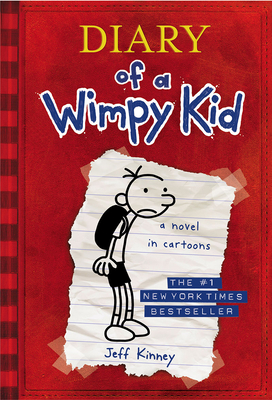
Diary of a Wimpy Kid

Title: Diary of a Wimpy Kid
Author/Illustrator: Jeff Kinney
Graphic Novel

     I have never read a book quite like this one before.  Sure I have read books that are formatted as a journal but never alongside the comic book aspect, and I must say that I was a fan of this book.  It is a first person story about Gregory's life in middle school.  He is not a popular kid and goes through a lot of the same things that most kids do in middle school.  In my opinion, all kids are strange in middle school as they make the transformation from little kids in elementary school to teenagers in high school.  Everyone has issues with choosing friends, embarrassing parents, annoying siblings, and trying to be cool and popular.  That is why I think this book is great for middle school aged students, especially boys.  Everything Gregory talks about that is going on in his life, from his frustration with his baby brother Manny to being forced to try out for the school play to trying to win back his best friend Rowley after a mishap, could be related to the reader's personal middle school experience or someone they know.  Also, I think this book is targeted more for boys and the comic book aspect makes it a hit.  I did enjoy this book as well being a girl, but I know my thirteen year old brother and all of his friends read the book and saw the movie... and he never reads books.  This being the first book in a series, gives young middle school boys a great option of literature.  I do hope that I will one day read the rest of the series and also watch the movie based on this great book for kids.

Thursday, March 8, 2012

Pig Kahuna

Title: Pig Kahuna
Author and Illustrator: Jennifer Sattler
Picture Book

     This is an adorable little picture book that I think many children would enjoy.  The story is about two pig brothers, Fergus and Dink, who love searching for treasures on the beach.  One day they find a surf board which completes their collection, but forces Fergus to confront his fears of the ocean water.  It is a cute and silly story about brothers, adventure, and overcoming your biggest fears.  I think this would be a great book to use in the classroom, either in a lesson or just for fun.  Younger students will definitely enjoy the humor and the beautiful pictures.  Jennifer Sattler does a beautiful job with acrylics and colored pencils to create vivid and colorful scenes of the two brothers and their adventures.  I would recommend this book for all primary level classrooms and students.  It would make a very fun and silly read-a-loud.

Tell Me Again About the Night I Was Born

Title: Tell Me Again About the Night I Was Born
Author: Jamie Lee Curtis
Illustrator: Laura Cornell
Picture Book
     I remember receiving this book as a present when I was little and it instantly became one of my favorites.  When my family adopted my baby brother someone gave me this book, and most likely in jealousy of all the attention the new baby was getting I clung to this book and thought the story was all mine to tell.  This is a cute little story about and from the point of view of a young girl who was adopted.  She loves hearing her parents tell her the whole story with all the details about the night she was born and taken home in their care.  To me at the time I first read it, I realized that adoption wasn't all too common but it also did not seem strange to my family.  Even more so looking back now, I realize how great this story can be for kids who are adopted as well as others to understand the simplicity of the situation and how great it can be.  
     Laura Cornell is one of my favorite children's book illustrators.  Her pictures are beautiful and tell a story of their own.  Each page is an adventure.  The text is simple to be read aloud, but the pictures allow the reader and especially young children to see the complete story at the same time.  There is so much color and detail, and I think this is one of the reasons why I loved her books as a kid because you could spend a while on each page taking in all the little things in background.  Each face's expression and little detail aid in telling the story.

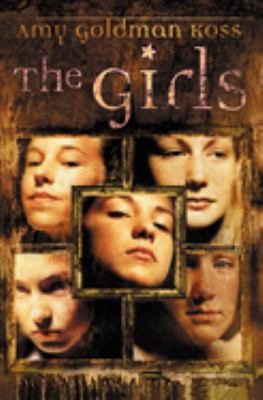
The Girls


Title: The Girls
Author: Amy Goldman Koss
Genre Study: Contemporary Realistic Fiction grade level 6-8

     This book is perfect for middle school aged girls because I think it is a story they can all relate to.  However, I would not use this book academically for any reason more than simply something to encourage reading at that age.  This book tells the story of a group of average middle school girls and the drama that is oh so common.  I liked how each chapter is from a different point of view so you can really get a sense of who each character is and how they think.  It did take a little getting used to figuring out which girl did what and said what but by the end the reader knows each of the girls individually.  On the other hand, this was such a quick read that I feel like too big of a portion of the book was just a warm up and I felt there should have been more to the story than what it was left at.  The girls are very over dramatic and some are very mean but as I said, any girl who has been through middle school should be able to relate whether they have been any of the characters in the situation or know someone like them.  I did like the little bit of irony at the end and that some of the nice girls did not totally lose to the mean girl but it would have been better with more depth.  I would recommend this book to female students with the pure intention of trying to get them to read, and to enjoy reading.  Hopefully they would enjoy reading this story that could be easy to relate to.

Yellow Star

Title: Yellow Star
Author: Jennifer Roy
Required Multicultural Text

     This is an excellent story told from the point of view of a young Polish- Jewish girl growing up in the Lodz ghetto during World War II.  From the over 270,000 people that once settled in Lodz, Syvia was one of the only twelve children that survived out of 800 total.  The story is told in poetry form but is extremely effective.  I could not put this book down as I read this child's account in history.  It is told in simple language, that of a ten year old girl, but is very compelling.  Background information of what was going on from a more global standpoint is provided throughout the book and helps to keep the story line straight.  I was amazed many times over again through this story on the atrocities taking place and the brave acts of heroism that save so many lives.  Syvia, along with most if not all of the others that survive this ghetto, I would credit to one man, Syvia's father. 
     Though parts of the story are disturbing, and it is so much more disturbing coming from the eyes of a child, I think this is a great book for students and adults to read and learn about the history.  This time period for these people is very disturbing in general and so I believe it is done justice in this story.  I would suggest more research and background information to accompany this book in the classroom but I feel it would be great for students to try and relate to in the least bit.  It is one of the few stories from this area of history that does have a happy ending, but it pulls at many emotions.  I found myself crying and times and laughing through other parts of the book.  It is written beautifully and effectively for the reader to connect with the simple character but at the same time understand what is going on around the young girl even if she doesn't.  I would recommend this book to teachers to use in the classroom of upper elementary and middle school, but also to readers my age and older.  It is rare to hear this type of first-person story from such a young character, but it is a powerful book and one that you won't want to put down.

Thursday, March 1, 2012

Matilda

Title: Matilda
Author: Roald Dahl
Book to Movie Comparison
          I recently read the book, Matilda, by Roald Dahl, and then proceeded to watch the 1996 movie based on the book.  I had seen the movie before but not for a long time so I could remember the general plot line but few details.  I had never read the book before and so I was excited to learn about the story that created the movie, since I often like reading the books after seeing the movie.  This story is about a young girl who is exceptionally brilliant in math and reading, even though she has a very difficult home life and soon a very terrible principle at school.  The young girl, Matilda, counters her rotten parents with many well planned practical jokes.  When she meets her loving teacher at school, they discover even more brilliance about Matilda and work to help each other out of the awful lives they were raised in.
          In my opinion, I think the movie did a decent job of sticking to the book’s original story line.  Frequently I noticed a lot of the same exact scenes that were described in the book and also some of the same lines used.  For example, Matilda gets her father back for his horrible attitude one time by putting some of her mother’s blond hair dye into his hair gel container.  In the morning when he usually greases up his hair, he ends up putting blond streaks in his full dark locks, causing a large scene in the kitchen.  This scene is extremely similar in the movie as it is written in the book.  Another example, is the scene where Miss Trunchbull, the school principle, has an assembly to force a young boy to eat an entire large chocolate cake.  Here at one point she says “…You sneaked like a serpent into the kitchen and stole a slice of my private chocolate chip cake from my tea-tray!  That tray had just been prepared for me personally by the cook!  It was my morning snack!”  For whatever reason, when I heard these words spoken in the movie, I remembered them being word for word written in the book.  However, at the same time this scene was changed for the movie to show Matilda as the heroine character.  In the book, a random student shouted to encourage the boy while the rest of the students remained silent till the end.  In the book this shouting came from Matilda as she gets the whole school out of their seats to cheer on the boy and then they are all kept after school for detention, which also does not happen in the book.  There were many small differences between the book and movie of course but the main ones I think are the fact that the book takes place I England, and the movie adds the most dramatic scene of Matilda and Miss Honey sneaking into the Trunchbull’s house, which never happens in the book.  A lot of the changes are to make the story more dramatic and focus more on Matilda’s special powers rather than her smart mind.
          Another slight difference the movie has to the book is some of the casting.  For the most part, I found the characters to be fitting of their description in the book except for Matilda’s parents.  The book describes a very skinny, mean man who can be intimidated by ghosts and teachers, and a large, bouncing, self-centered woman.  In the movie the father is instead short and plump, the mother very skinny.  These are only slight alterations I know, but at the same time, I think the actors portrayed the characters’ personality quite well according to the book.  So even though the physical descriptions may be a little off, I would not have changed the casting selections for this movie.
          Both the book and the movie, I found enjoyable so it would be hard for me to pick between the two.  To me, as an adult I like the book better because it is less dramatic and unrealistic compared to the movie.  Though these are both geared for children, I believe kids would enjoy the movie better.  The movie adds more dramatic scenes to the stories and really pushes Matilda’s special powers, which as a kid I remember being my favorite parts of the story.  Re-watching the movie at my age now, I still enjoyed but also found humor in some of the unbelievable aspects of the movie.  Though there were some of these parts in the book as well, they were less emphasized and more plausible written than on film.  It is difficult to chose one over the other, but I believe the distinction would be because of age; adults would enjoy the book more and children will love the movie.
          I would give the movie a positive rating because it was pleasing and entertaining.  In a lot of ways the movie stuck to the script of the book, but also in a lot of ways many alterations were made in order to better hold the interest of the young viewers.  As a kid, Matilda was a movie I truly loved because I liked the magical aspect and thought I was just like her.  This is a great movie for children because of the fantasy aspect of powers all kids want mixed with a life and problems sometimes felt to be reality.  From an educator’s standpoint, I think the book would also be great for kids, however, issues may arise with some the English culture within the text that even I did not fully grasp.  This is a great reason for the book to be made into a movie in the first place.  It is a great story that all kids can relate to and would enjoy, and the movie made it easier for American children to relate to, while at the same time juicing it up with extra drama and magic.  This is a great story for children in form of a novel and a movie.